Pulling Organization Structure & Starting Architecture Analysis
Once you authenticate your Podio account, Insights automatically discovers all the Organizations and Workspaces you have access to. With a single click, you can pull your entire organization structure and immediately begin deep architectural analysis.
How Organization Structure Analysis Works
When you synchronize an organization or workspace, Insights ingests your complete system blueprint:
- Automated Schema Discovery: Insights pulls all Apps, Fields, Settings, and Relationship connections across your workspaces.
- Calculation & Formula Parsing: Ingests every JavaScript calculation formula to detect broken field references, missing tokens, and mathematical errors.
- Workflow Automation Blueprinting: Downloads and maps all automated workflows, action steps, triggers, and notification templates in Podio Workflow Automation (GlobiFlow).
- Instant Baseline Version Snapshot: Captures an immutable snapshot of your entire structure so you can track all future changes and compare revisions over time.
- Zero Item Data Storage: Insights only analyzes and versions your system architecture and formulas — your confidential client and item records remain strictly inside Podio.
Multi-Organization Switching & On-Demand Refresh
If you manage multiple internal business units or external client accounts, you can switch between organizations seamlessly using the top organization dropdown. Whenever your team modifies an app or edits a workflow in Podio, click "Refresh Organization + Workflows" (or the Space Refresh button) to pull the latest changes, refresh diagnostic error counts, and inspect version diffs.
Automated Refresh-Completion Audit Emails
Whenever an organization or space refresh finishes, Insights automatically dispatches a comprehensive Refresh Completion Audit Email directly to your inbox. This ensures you are immediately notified of system health status and version changes without having to manually monitor the refresh progress in your browser.
8
42
189
• Health Issues Detected: 2 critical calculation errors • 1 workflow broken step
• Quick Action: Direct one-click buttons to open Health Details or inspect Split Diffs in Change History.
1. Snapshot Version: Informs you whether new changes were detected (e.g. Version #4) or if the schema was already up to date.
2. System Scope: Total counts of audited Workspaces, Apps, and Workflows.
3. Error Diagnostic Breakdown: Summarizes detected calculation formula errors, workflow step errors, renamed fields, and 100-field limits.
4. Workflow Automation Access Notice: Flags if Podio Workflow Automation (GlobiFlow) permissions need to be reconnected.
Every refresh completion email includes direct action links to "View Health & App Details" and "View Change History", letting you jump straight into the exact workspace report with a single click.
Workspace Error Diagnostics & Schema Health Checks
The Insights Dashboard automatically audits your entire workspace schema, calculation formulas, field configurations, and relational connections. The system categorizes and counts all detected issues across your apps and workflows so you can quickly resolve hidden failure points before they break production.
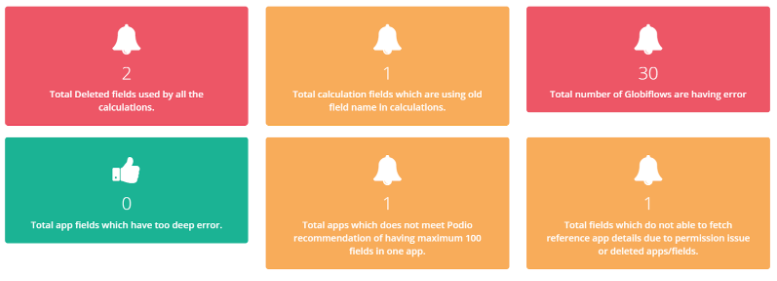
Summary of All Dashboard Error Checks
| Diagnostic Check | Severity Level | Real-World Risk & Why It Matters | How Insights Protects You |
|---|---|---|---|
| Deleted Field in Calculation | Critical | Calculations produce null, NaN, or calculation error boxes because a referenced field was deleted from Podio. |
Formula parser scans JavaScript calculation syntax and flags exact deleted Field IDs in red. |
| Broken Workflow Automations (GlobiFlow) | Critical | Automated emails, task assignments, or status updates fail to execute, causing customer delays and lost leads. | Audits all 20+ workflow action step functions and highlights missing app links or unbound variables in red. |
| Renamed Field Labels | Warning | External integrations (Zapier, Make, custom APIs) or legacy calculation formulas referencing old labels suddenly fail. | Tracks historical label modifications and displays original vs current names. |
| Calculation "Too Deep" (>10 Levels) | Critical | Calculation chains exceeding Podio's strict 10-level limit freeze and fail to compute values across connected apps. | Dependency engine traces calculation trees and alerts when depth approaches or exceeds 10 levels. |
| Apps Exceeding 100 Fields | Warning | Slow browser rendering, sluggish item editing, calculation timeouts, and mobile app launch crashes. | Alerts administrators when apps approach or cross Podio's recommended 100-field ceiling. |
| Deep Relational App Chains | Advisory | Chained relationships nested 4+ levels deep create slow database filtering and report calculation lag. | Computes App Depth hierarchy (Level 0 Root to Level 3+ Chained) and flags over-nested apps. |
Renamed Fields: Workflow Automation Filter Breaks & Integration Failures
Renaming a field in Podio (e.g. changing "Deal Stage" to "Pipeline Status" or "Assigned Rep" to "Closer") seems minor, but it frequently introduces subtle, hard-to-diagnose problems across your workflows and external integrations:
Flows that use filter conditions (such as fieldChanged, fieldValueMatch, or custom PHP filters in customPrep) can fail to trigger or evaluate conditions incorrectly when referenced field labels change, leading to silent workflow skips.
Podio calculation editors often retain the old label in the formula text (e.g. @[Old Name]). When a teammate reads the formula later, they search the app for "Old Name", find nothing, and cannot identify which live field is actually driving the calculation.
External integrations (Zapier, Make, custom webhook handlers) that map payloads by field label fail to parse incoming data when labels are changed without updating the external endpoints.
Saved Views & Relational App Depth
Insights analyzes how your apps interconnect across workspaces and calculates Relational App Depth:
- Level 0 (Root Apps): Independent foundational apps (e.g. Company Settings, User Directory).
- Level 1 (Direct Children): Apps directly linked to root apps (e.g. Contacts linked to Companies).
- Level 2+ (Chained Apps): Nested transactional apps (e.g. Invoices → Deals → Contacts → Companies). Insights warns when depth exceeds 4 levels, as deep relational chains slow down Podio view filtering.
Podio Best Practice for Field Limit & Performance Guidelines
Podio officially recommends keeping every app under 100 fields. As an app approaches or exceeds this threshold, performance degrades:
Saved views in Podio that filter or sort by fields that were subsequently deleted or renamed silently break, showing empty tables or wrong counts. Insights audits view criteria to flag corrupted view filters.
Calculates the nesting depth of your relational hierarchy from Level 0 (Root apps) down to Level 3+ (Deeply nested child apps) so you can simplify overly complex multi-app chains.
Podio 100-Field Limit & Performance Ceilings
Citrix Podio officially recommends keeping the number of fields per app under 100 fields. Apps exceeding this threshold suffer from slow rendering, delayed formula execution, and higher risk of timeout errors on item saves. Insights highlights apps approaching or exceeding 100 fields so you can safely modularize your architecture.
Calculation & Formula Inspector
Podio calculation fields execute client-side JavaScript across related apps. When fields are deleted, renamed, or nested too deeply, formulas silently break. Insights parses every formula syntax tree and provides granular relational reference mapping.
Deleted Fields in Calculations & Automations (The "Silent Bug")
In Podio, deleting a field does not cascade or warn you about dependent formulas or automations. When a field is removed, it triggers silent failures across multiple workspaces:
Calculations referencing the deleted field return null or NaN. The formula keeps an orphaned field token (e.g. item_field_29559573), preventing formulas and rollups from computing correctly.
Automations attempting to update, read, or filter on the deleted field continue running but skip writing data. Automated task creations, email triggers, or status updates fail without sending any error alert.
Deleting a field in a child app (e.g. "Invoice Amount") breaks rollup calculations in the parent "Accounts" app, which in turn corrupts executive summary KPIs across connected workspaces.
While cleaning up an old app, one of our users deleted a field they believed was no longer in use. Podio gave no warning that a calculation elsewhere still referenced it — the formula kept running, but quietly started returning blank values instead of an error.
On the next refresh, Insights flagged the exact calculation and field ID that no longer resolved. Because the deleted field's original name and configuration were still in Insights' history, they could restore the correct reference before anyone downstream noticed the numbers were wrong.
Calculation Field Inspector & Relational Reference Breakdown
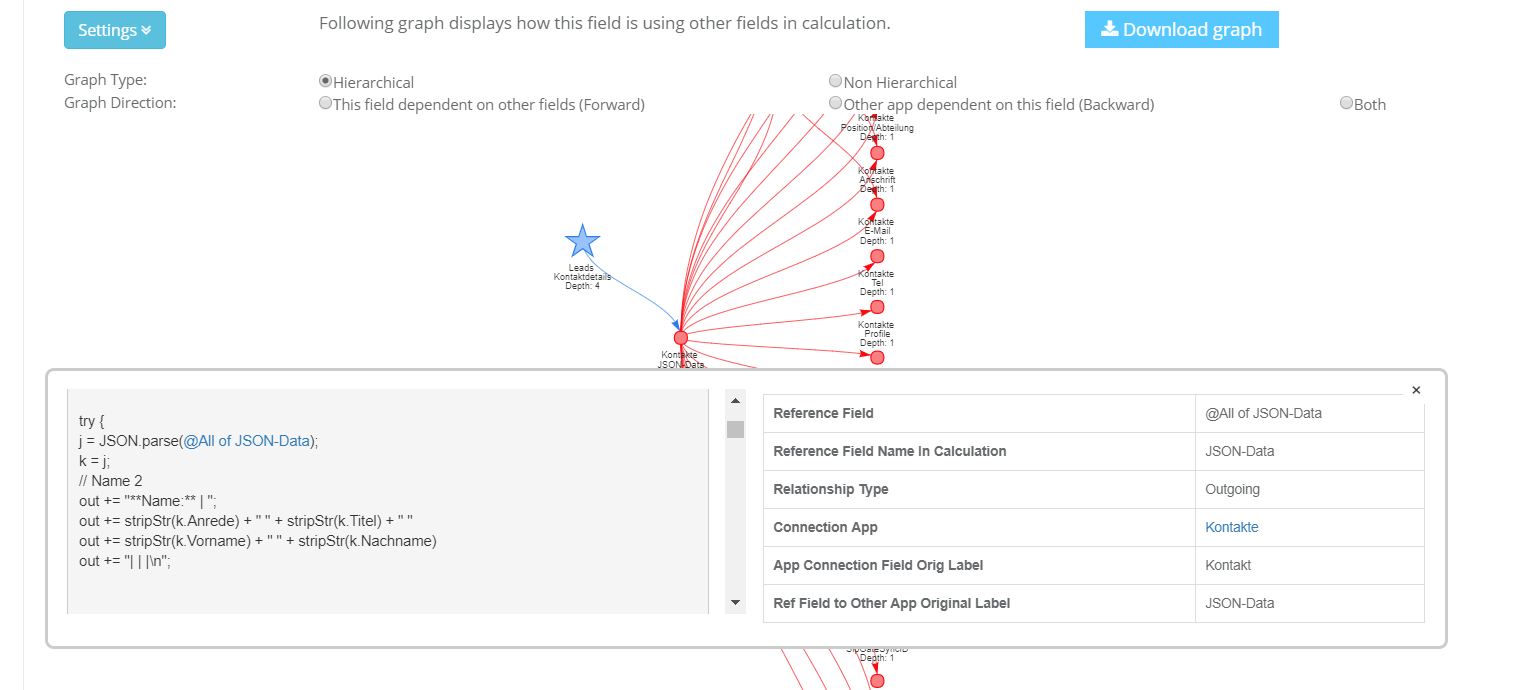
In complex Podio calculations, formulas frequently reference fields across related apps (such as @All of..., @Sum of..., @Max of..., or @Min of...). Often, developers and administrators are not sure which foreign app a specific field is coming from or what type of incoming/outgoing relationship is connecting them.
Insights provides a complete, granular reference breakdown for every calculation field in your app:
var cHourArrs = {};
var cShowTotBudHrs = 0;
var cShowTotHrs = 0;
var cDiff = 0;
var displayMSG = '';
var cData = '';
// Iterates through durations & builds report
Insights clearly identifies whether a calculation pulls from a child app pointing back to this item (Incoming, e.g. Time Entries linked to a Project) or from a parent app this item references (Outgoing, e.g. a Project linking to a Client).
From each calculation detail row, click "View Graph" to trace full multi-hop calculation trees, or click "Edit Notes" to leave persistent architectural documentation for your team.
Calculation "Too Deep" Error & 10-Level Depth Limit
Podio enforces a hard restriction: JavaScript calculation formulas cannot exceed a nested depth of 10 levels. When calculation fields reference values across a chain of related apps (e.g. App A → App B → App C → ...), reaching 11 levels triggers Podio's "Too Deep" error, halting calculation workers and leaving fields blank.
Insights tracks how deeply nested each calculation formula's dependency chain runs. Formulas that pull from other calculations across a long chain of related apps can get hard to reason about — and in practice, very deep chains are where Podio calculations are most likely to silently break or return unexpected values. Insights flags any formula whose chain exceeds 10 levels deep so you can spot these before they cause problems.
@[Deal Commission]└─ [Depth 2] Deals:
@[Closer Rate]└─ [Depth 3] Closers:
@[Rep Tier Payout]└─ [Depth 4] Tiers:
@[Quota Multiplier]└─ ... 6 Intermediate Related App Lookups ...
└─ [Depth 11 - CRITICAL ERROR] Company Settings:
@[Fiscal Target] (Exceeds Podio's 10-Depth Maximum)
When the 10-level calculation limit is reached, Podio silently freezes the formula output. Summary reports, financial summaries, and deal commission rollups display outdated or zero values.
Shorten calculation chains by offloading intermediate computations to Podio Workflow Automation (writing static values) or linking downstream apps directly to root apps instead of chaining multi-hop relationships.
Workflow Automation (GlobiFlow): Error Detection & Resolution
Podio Workflow Automation (commonly known as GlobiFlow) runs your critical business automations. However, when app fields are edited, flows are duplicated, or relationships change, workflows can fail silently without sending any alert. Insights continuously parses and validates all your workflows in the background.
The 4 Most Common Causes of Workflow Failure
When you copy a flow between workspaces or re-create an app relationship field, Workflow Automation often drops the variable binding, turning the blue variable pill into raw unlinked text. The workflow cannot find the related item and skips the action.
A workflow step attempts to update or read a field in another app, but a colleague has deleted that field in Podio. The workflow continues to run but fails to write data, causing empty records.
A workflow assigns a category status using calculation mode (e.g. "In Progress"), but the category option in Podio was renamed to "Active - In Progress". Workflow Automation cannot find the matching option and leaves the field blank.
Flow A triggers on item update and updates App B, which in turn triggers Flow B that updates App A. This creates an infinite loop that burns through your monthly workflow execution quota in minutes.
Step-by-Step Guide: How to Fix a Broken Workflow Step
-
1Locate the Flagged Workflow in InsightsOpen the Workflow Automation tab in your workspace. Flows with broken steps are highlighted with a red warning badge, showing the exact step number and failure reason.
-
2Open the Workflow in Podio Workflow Automation (GlobiFlow)Log into Workflow Automation and navigate to the corresponding App and Flow name.
-
3Re-Select the Variable or FieldClick on the broken field in the action step. If it is an App Relationship or variable, re-select the blue variable token from the dropdown until the pill is restored.
-
4Save & Refresh in InsightsClick Save in Workflow Automation, then click "Refresh Organization + Workflows" (or the Space Refresh button) in Insights. The red warning badge will clear, confirming the workflow is healthy.
One of our users rebuilt an app relationship field in Podio without realizing it also reset the field binding inside a workflow step that had been updating client records for months. The flow kept "running" on every trigger — it just wasn't writing anything anymore.
On the next refresh, Insights flagged the step as broken with the specific reason — an unresolved field reference. The user reopened that same step in Workflow Automation (GlobiFlow), re-selected the field, and confirmed the warning cleared on the next check, before any more records went unfilled.
Manual Flow Caller & Trigger Trees
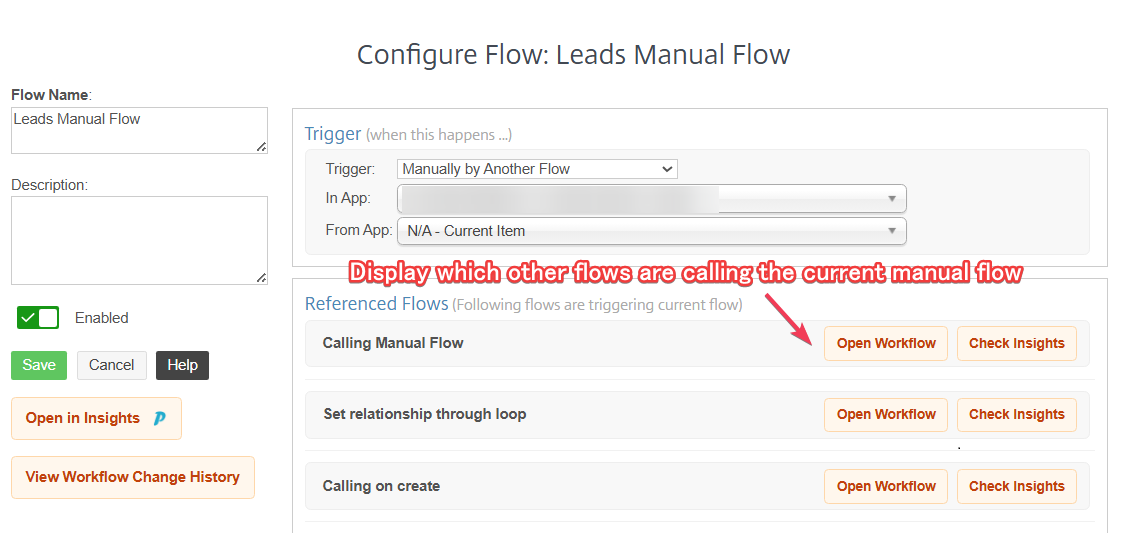
In native Podio Workflow Automation (GlobiFlow), there is no way to see which other workflows are triggering a manual flow. If you are modifying, pausing, or deleting a manual flow, you have zero native visibility into which automated flows across your workspaces depend on it.
Insights eliminates this blind spot by scanning all workflows across your organizations and mapping complete Manual Flow Caller & Trigger Trees. For any manual flow, Insights immediately displays the full list of upstream workflows that call it (via triggerSelf, triggerCollected, or webhook relays), allowing you to safely refactor business logic without breaking downstream dependencies.
• Flow #3784885: "3. SOLO Contract Signed Data Received" (App: Solo API Data)
• Flow #4331630: "7b. Aurora Contract Signed Data Received" (App: Aurora API Data)
• Flow #3864389: "Rep Match & Sync Profile" (App: Commission Records)
• Flow #4190659: "Attach Related Closer Profile" (App: A-C-C)
Live Caller Visibility in Workflow Automation via Chrome Extension:
When using the Insights Chrome Extension, you don't even need to switch back to the Insights dashboard. Whenever you open any workflow inside the Podio Workflow Automation UI, the extension automatically injects a live caller panel directly into the workflow editor — listing all parent flows that trigger the current workflow with direct one-click jump links.
Granting Workflow Insights Access (Service User vs. Credentials)
To allow Insights to automatically download, validate, and track revisions for your GlobiFlow workflows, Insights requires read-only API access to your Podio Workflow Automation account. You can connect access using either of two methods:
Invite the user insights@insightspod.io to your Podio workspaces as an Admin Service User, and add them as an additional user in your Podio Workflows.
If you manage dozens of workspaces and prefer not to invite a user manually to each one, you can provide dedicated Podio user credentials in your Account Settings. Credentials are encrypted and used solely by the automated background sync.
Change History: Version Control & Split Diffs for Podio
Podio and Workflow Automation (GlobiFlow) do not provide native version control, revision history, or an "Undo" button. If a teammate or consultant accidentally modifies a complex calculation, changes a category option, or deletes a workflow step, recovering the previous setup is impossible without version snapshots.
The 4 Levels of Change Tracking in Insights
| Version Snapshot Level | What is Captured During Each Sync | How Changes are Detected & Displayed |
|---|---|---|
| 1. Organization Level | New spaces created, spaces deleted, total apps, and organization-wide field count trends. | High-level architectural audit showing workspace growth and structural modifications. |
| 2. Space Level | Apps added or removed from a workspace, member changes, and total item count movements. | Workspace-level change log with timestamped snapshot comparisons. |
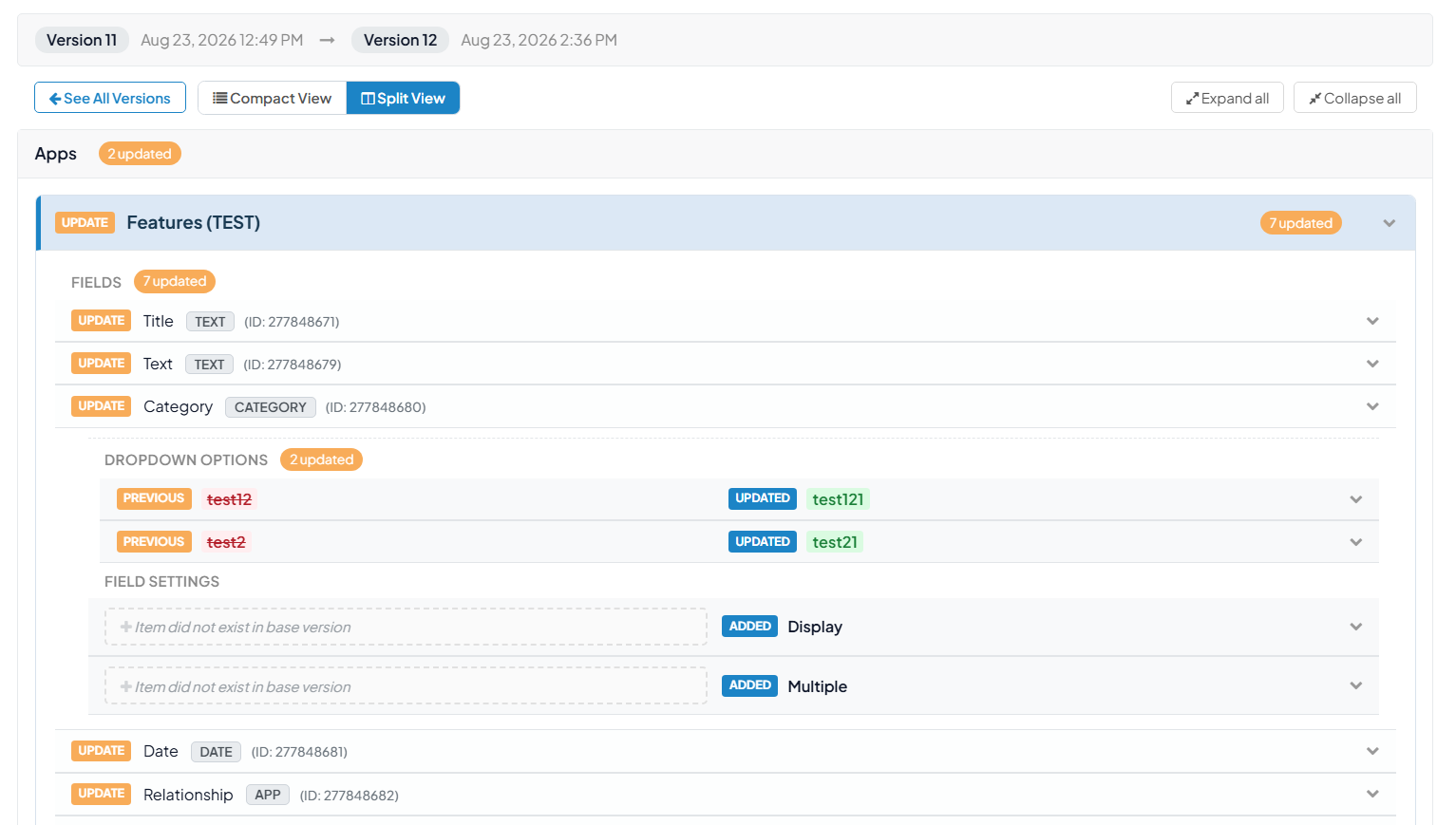
| 3. App & Field Level | Fields added, deleted, renamed, field type modifications, formula updates, and required settings. | Field-by-field chronological timeline showing exact formula and property diffs. |
| 4. Workflow Automation Level | Added steps, deleted steps, modified filter conditions, changed email templates, and variable adjustments in Podio Workflow Automation (GlobiFlow). | Rendered in the interactive Split Diff Viewer with synchronized side-by-side comparison. |
Comparing Snapshots at Org & Space Level (Git for Podio)
Just like Git version control tracks code changes for software developers, Insights provides an instant, one-glance comparison between any two historical snapshots:
- Organization Level Comparison: In one glance, see high-level architectural changes across your entire account — new workspaces created, deleted spaces, and organization-wide app growth between sync dates.
- Space Level Comparison: Quickly inspect which apps were added, modified, or removed from a workspace, and track schema evolution without manually comparing apps one by one.
Simply select any two snapshot dates from the comparison dropdown to view an automated summary of all structural additions, modifications, and deletions.
Pipeline Opportunities (18 Fields, 2 Calculation Formulas)Commission Records (+1 Field Added, 1 Formula Updated)Archived 2023 Leads (App #28471920 removed from Podio)App Field Revision Timelines
When inspecting any application in Insights, navigate to the Change History tab. The system presents a chronological timeline of every schema modification made to that app:
Using the Workflow Automation (GlobiFlow) Split Diff Viewer
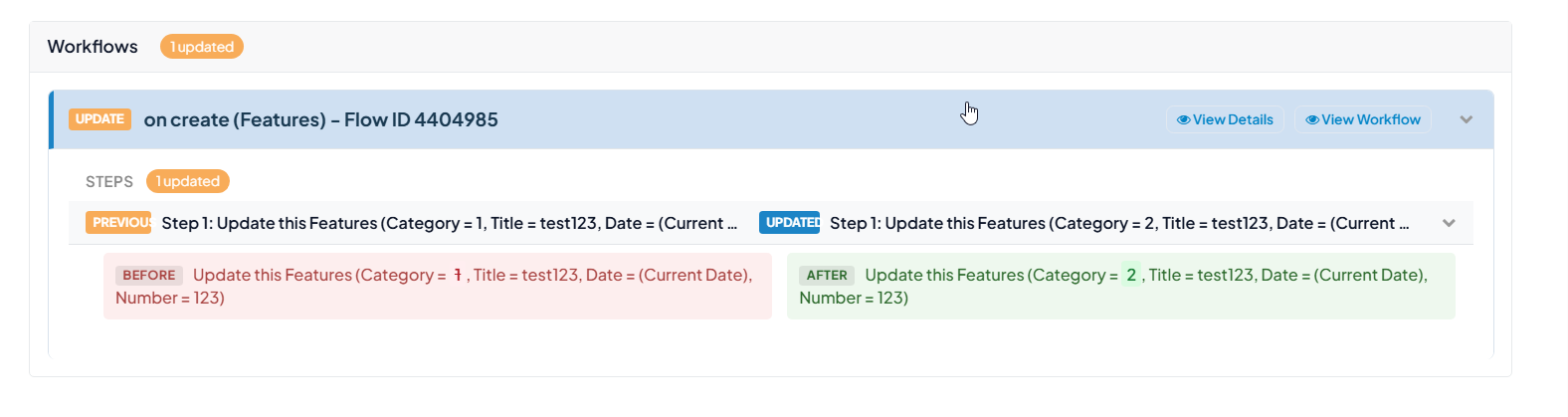
The Split Diff Viewer allows you to select any two historical revisions of a workflow and see a side-by-side comparison with color-coded change highlights:
Understanding the Color Highlights
The Split Diff Viewer uses three color codes to highlight structural differences at a glance:
A teammate on one of our users' accounts edited a calculation step in a core workflow late on a Friday, then couldn't remember exactly what the step looked like before the change. Podio and Workflow Automation have no built-in undo for this.
They opened the flow's version history in Insights and compared Thursday's snapshot against Friday's. The Split view showed the modified step in orange with the previous configuration right next to the new one, so they could copy the original values straight back into Workflow Automation (GlobiFlow).
Dependency Graphs: Forward Data Flows & "Safe-to-Delete" Checks
In Podio, calculation formulas and automations frequently span 4 or 5 different apps. Deleting or modifying a single field without knowing what depends on it can cause broken calculations and failed workflows across connected apps.
Backward Impact Analysis ("Safe-to-Delete" Pre-Flight Check)
Before deleting or repurposing any field in Podio, check its Backward Dependency Graph in Insights. The graph traces every downstream calculation, rollup, and workflow that consumes data from this field.
Before archiving a set of fields that looked unused in an old Contacts app, one of our users wanted to be sure nothing else in the workspace still depended on them.
Checking each field's Backward Dependency Graph first, they found a couple of them still fed calculations in a connected Deals app. They updated those calculations before touching Podio, instead of finding out after the fact from a broken report.
Forward Calculation Dependency Graph
The Forward Dependency Graph maps all upstream source fields feeding into the current calculation. It displays the origin of raw inputs (dates, numbers, currency values, relationship fields) and illustrates how data propagates into the computed formula.
App-to-App Relational Connections
Visualizes how applications link together across workspaces via Podio App Relationship fields, providing clear visibility into relational hierarchies and cross-app workflows.
In-App Architecture Documentation & App Schema Excel Export
Keeping documentation up to date is essential when managing complex Podio workspaces. Insights allows you to annotate fields with developer notes and export complete application schema documentation to Excel with a single click.
In-App Architectural Developer Notes
Add developer documentation notes directly to fields and apps inside Insights. Explain why a calculation formula was constructed in a specific way or document business rules for future developers, administrators, and consultants.
App Schema Excel Documentation Export
Insights generates comprehensive Excel documentation workbooks for any application, providing a complete technical data dictionary for audits, compliance, and client handoffs:
| Exported Column / Property | Description & Data Captured |
|---|---|
| Field ID & External ID | Podio internal identifiers and API keys for developer integration. |
| Field Label & Type | Display name and Podio field type (Text, Number, Date, Calculation, Category, App Relationship, etc.). |
| Status & Required Flag | Active/deleted status and whether the field is required on item creation. |
| Calculation Formula Script | Full JavaScript formula text for calculation fields. |
| Used in Other Apps | Cross-app references indicating which foreign applications pull data from this field. |
| Used in Workflow Automation Flag | Indicates whether this field is referenced inside automated workflows in Podio Workflow Automation (GlobiFlow). |
| Referenced Apps | Target apps connected via App Relationship fields. |
| Developer Notes | Custom in-app architectural documentation notes attached to the field. |
Insights Chrome Extension: Live In-Podio Schema & Dependency Inspector
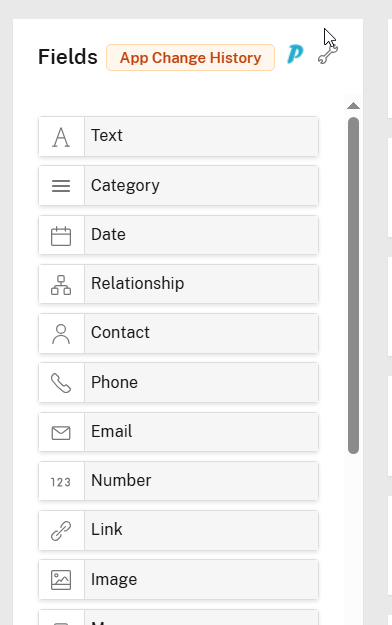
Access Insights for Podio directly inside your browser while managing your Podio platform. The extension embeds interactive inspection badges right inside Podio's "Modify Template" builder.
How to Install & Connect
-
1Install from Chrome Web StoreAdd the Insights for Podio extension to your Google Chrome browser directly from the Chrome Web Store:

-
2Sign In with Your Insights AccountClick the Insights icon in your Chrome toolbar and log in with your credentials to automatically connect your synchronized workspaces.
Live Inspection & Quick Action Toolbar in Podio
The extension embeds interactive quick-action buttons directly into standard Podio App views as well as inspection overlays in the "Modify Template" builder:

Inspect app-level health and jump to revision diffs directly from Podio:
- App List Action Bar: Click "Check Insights" or "View App Change History" right from the top navigation bar of any Podio app view.
- Template Builder History: Open full schema version diffs directly via the "App Change History" button in Modify Template mode.
- Real-Time Error Alerts: Highlights if the app has active calculation or formula errors (e.g. "This app has 1 error(s)").
- Referenced & Dependent Apps: Instantly view inbound and outbound relational app connections.
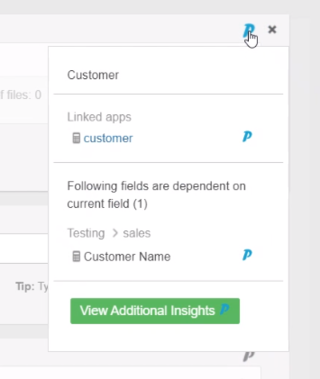
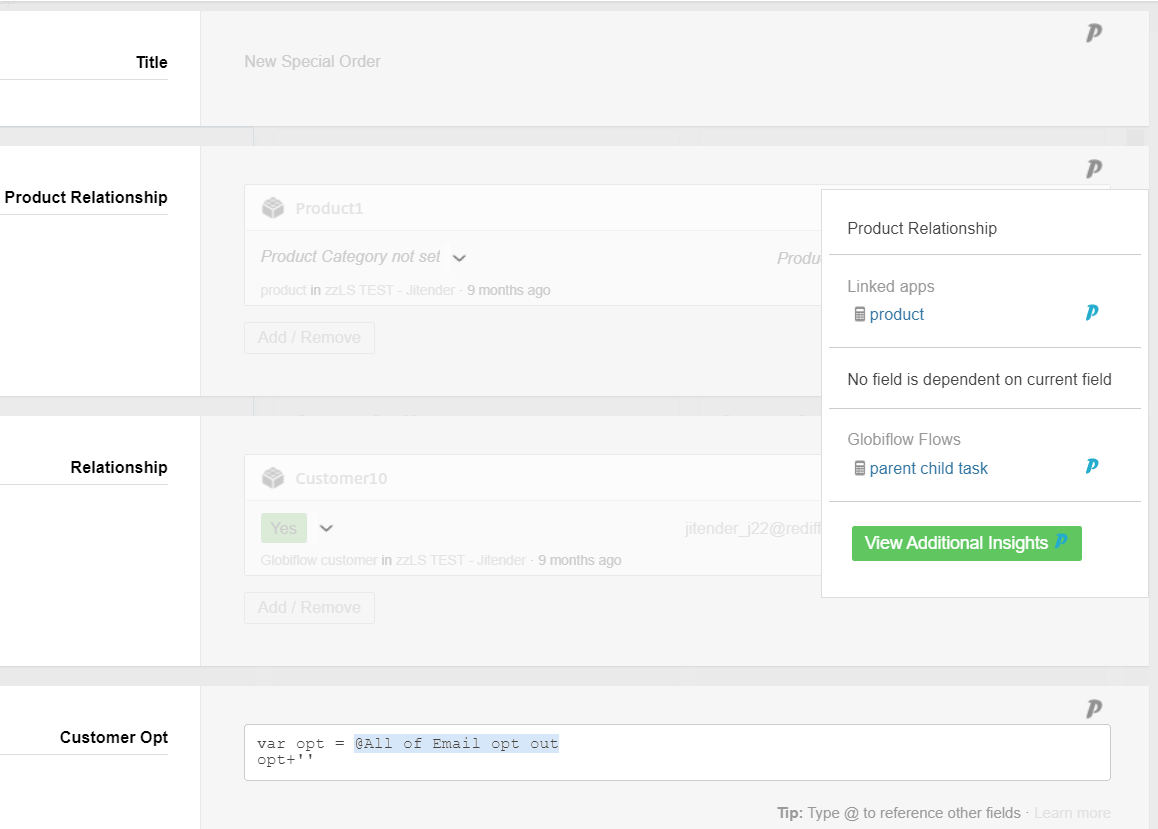
Click the Insights icon next to any individual field in the template builder to inspect:
- Linked Apps: Target relationship app connections for the selected field.
- Dependent Fields: Exact list of fields in other apps that depend on this field.
- Triggered GlobiFlow Flows: See which automated workflows are triggered by or reference the field.
- Safe Editing: Verify dependencies before deleting or renaming fields without leaving Podio.
Live Workflow Inspection & Navigation in Workflow Automation (GlobiFlow)
The extension also operates seamlessly inside Podio Workflow Automation (GlobiFlow):
When opening any workflow in Workflow Automation (GlobiFlow), the extension automatically inspects step configurations and highlights if the flow contains broken tokens, missing target fields, or configuration errors directly inside the workflow builder.
When viewing a manual flow in Workflow Automation (GlobiFlow), the extension reveals all parent flows triggering it and flags if any caller has errors. Plus, enjoy fast one-click jump links to open connected apps, view workflow change history, and jump directly into caller workflows.